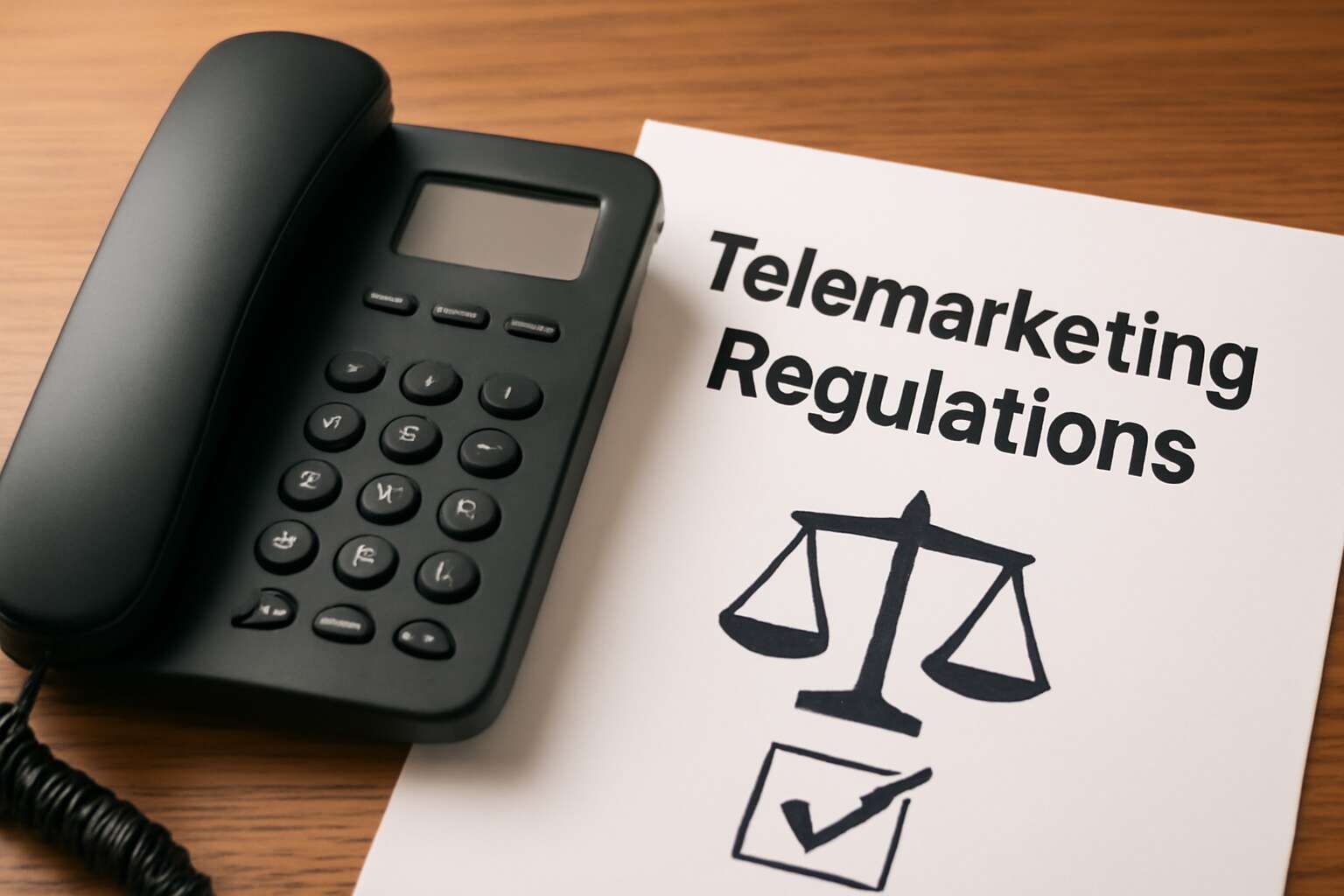
Regulatory Landscape for Telemarketing at a Glance
What telemarketing regulation covers
In South Africa, the dance between outreach and privacy plays out in bright boardrooms and quiet compliance audits. That interplay shapes every campaign, echoing through call scripts and consent banners. The guiding question—who regulates telemarketing—determines what is permissible, what must be disclosed, and how customers respond to a clever pitch that respects boundaries.
Practically, oversight rests on a trio of pillars—the Consumer Protection Act, enforced by the National Consumer Commission; POPIA, safeguarded by the Information Regulator; and ICASA’s codes that govern how telecoms and marketers may operate.
- National Consumer Commission (NCC) under the CPA
- Information Regulator for POPIA compliance
- ICASA codes that govern telecoms and marketer conduct
Together, these bodies sketch a constellation of duties—consent, disclosure, data protection, and fair dealing—guiding brands to speak with elegance rather than intrusion.
Key agencies shaping policy
The switchboard whispers a truth: policy is the unseen switch behind every call. In South Africa, the regulatory landscape reads like a night map—three constellations guiding every outreach. The question—who regulates telemarketing—shapes every script and the moment a customer glances at your number and pauses.
Three pillars light the horizon: the National Consumer Commission upholding the CPA; the Information Regulator guarding POPIA; and ICASA mapping the codes that govern telecoms and marketer conduct. Read together, they keep outreach honest—balancing the thrill of a clever pitch with the gravity of privacy and fair dealing. The story is not about conquest but careful choreography, where every call lands with purpose and respect.
Global vs local jurisdiction considerations
Jurisdiction is the new caller ID. A single ping across borders can trigger a tangle of rules, turning a simple outreach into a policy puzzle. “Consent governs every dial,” a seasoned regulator likes to say, and this global-local dance defines who regulates telemarketing.
- Cross-border data transfers and privacy regimes
- Consent standards and opt-out requirements
- Enforcement reach and penalties
Global vs local considerations sculpt the landscape. Campaigns venturing beyond borders must navigate multiple legal soils where consent, timing, and data handling collide.
Back home in South Africa, the domestic stage is set by POPIA, the CPA, and ICASA, while international ventures require sensitivity to foreign privacy laws and platform policies. The result is a tapestry where local protections meet global expectations, and every dial must respect both.
In the end, the regulatory landscape reads like a map—not a manual—with blue lines for compliance and red alerts for misdialed mischief.
Recent regulatory trends and updates
“Consent governs every dial,” a regulator likes to say, and in South Africa that line is more than a motto—it’s a map. The regulatory skyline blends POPIA, the CPA, and ICASA with global privacy scripts when you cross borders. So, who regulates telemarketing across markets? The answer is a chorus: local authorities, data protection regimes, and platform policies all hum along in tune.
Recent regulatory trends and updates sketch a more intricate tapestry. For South Africa, the domestic frame remains rooted, yet international ventures must respect foreign privacy laws and platform policies—think GDPR-adjacent expectations and cross-border safeguards.
- Cross-border data transfers tighten, with more scrutiny on how data flows and is stored.
- Consent standards and opt-out requirements grow sharper, aiming for clarity and ease of withdrawal.
- Enforcement reach widens, with higher penalties and quicker action on non-compliant campaigns.
Who Regulates Telemarketing by Country
United States: TCPA, FTC, and FCC roles
In the United States, who regulates telemarketing? A constellation of powers guides consent and cadence! For South African readers, it offers a distant, instructive map of how outbound outreach is curated.
Three principal actors shape the landscape: the TCPA, the FTC, and the FCC.
- TCPA (Telephone Consumer Protection Act): limits automated dialing and prerecorded messages, requires consent for cell calls and texts, and enforces Do Not Call protections.
- FTC (Federal Trade Commission): enforces consumer protection and truth-in-advertising rules, policing deceptive practices and pursuing penalties.
- FCC (Federal Communications Commission): regulates interstate and international calls, sets rules on caller ID and number spoofing, and blocks prohibited robocalls.
This trio works with overlapping aims—protecting consumers while guiding legitimate business outreach, inspiring trust.
So, for a global audience, the threefold framework of TCPA, FTC, and FCC informs how compliant outreach can be imagined across borders.
United Kingdom: ICO and PECR
In the United Kingdom, who regulates telemarketing? The answer lands with two bodies: the ICO and the PECR. The ICO enforces data protection and privacy, while the Privacy and Electronic Communications Regulations govern how marketing messages are sent, when consent is required, and how complaints are handled.
- Consent requirements for marketing calls and texts
- Rules on caller ID, opt-out rights, and record-keeping to prove compliance
South African readers can note how a jurisdiction separates data protection from marketing practices, yet keeps a consistent emphasis on consumer choice and accountability. The UK approach combines clear consent, traceable outreach, and penalties that keep campaigns in check.
Ultimately, the framework shows that who regulates telemarketing in the UK is not a single agency but a collaboration that informs cadence and integrity.
Canada: CASL, CRTC, and provincial rules
In Canada, the ledger of telemarketing is kept by a trio of guardians. “Consent is the compass of outreach,” regulators remind, and the CASL with the CRTC keep that compass steady. I love how, for South Africa readers, this arrangement shows data protection can walk alongside marketing law, preserving choice while demanding accountability.
- CASL: federal Anti-Spam Legislation governing consent, content, and unsubscribe for commercial electronic messages.
- CRTC: enforces telecom conduct and do-not-contact rules for marketing communications.
- Provincial rules: privacy acts and consumer protections adding local remedies and oversight.
Ultimately, who regulates telemarketing in Canada is a tapestry of federal framework, provincial stewardship, and practical enforcement.
Australia and New Zealand: Do Not Call Register and regional rules
In a calling landscape where consent rules the game, regulators keep the pace. “Consent is the compass of outreach,” they say, and that compass points to Australia and New Zealand. So, who regulates telemarketing in these markets?
Australia uses the Do Not Call Register to screen unsolicited calls, with ACMA enforcing federal rules alongside privacy and regional protections. New Zealand relies on the Unsolicited Electronic Messages Act, administered by the Commerce Commission, complemented by local consumer protections.
- Australia: Do Not Call Register; regulator ACMA
- New Zealand: Unsolicited Electronic Messages Act; regulator Commerce Commission
For South African readers, these models show how regional nuance and consent-first policies can coexist with vigorous enforcement.
Key Laws and Compliance Frameworks
Do Not Call lists and consent requirements
South Africa’s telemarketing regime is not a single sentinel but a coordinated system built on POPIA and the Consumer Protection Act. These laws demand lawful processing, transparency, and meaningful consent. When facing the question who regulates telemarketing, the answer points to privacy authorities, consumer commissions, and sector regulators, all upholding fair play and accountability.
Do Not Call lists and consent requirements sit at the heart of compliance. Opt-in guarantees and revocation rights carve the boundary between outreach and intrusion, while robust record-keeping supports audits and accountability. The practical framework emphasizes minimal data use, clear disclosures, and straightforward opt-outs.
- Do Not Call-like registers and consent tracking
- Auditable consent, data minimization, and opt-out mechanisms
Consent, opt-out, and disclosures in telemarketing
Consent isn’t a mere formality; it’s the firewall that keeps outreach lawful. In South Africa, who regulates telemarketing? The answer isn’t a lone agency but a cooperative chorus—privacy authorities, consumer commissions, and sector regulators—enforcing POPIA and the Consumer Protection Act to ensure data processing is lawful, transparent, and purposeful. Meaningful consent and clearly disclosed terms sit at the center, with robust record-keeping turning audits into routine reality.
- Auditable consent trails
- Data minimization and purpose limitation
- Transparent opt-out choices
- Clear disclosures and ongoing consent review
Opt-out rights and disclosure responsibilities create the boundary between helpful updates and intrusive calls. When formulating scripts and databases, organizations must document consent status, retention periods, and revocation processes—empowering customers and easing regulatory scrutiny without stifling business conversations. That answer—who regulates telemarketing—rests on privacy authorities, consumer bodies, and regulators guiding POPIA compliance and CPA mandates into everyday practice.
Caller ID, spoofing restrictions, and authentication
In South Africa’s theater of numbers, the question who regulates telemarketing isn’t a solitary exam but a chorus—ICASA, privacy authorities, and consumer bodies harmonizing under POPIA and the CPA to keep calls lawful and respectful.
Key laws keep time with Caller ID integrity, spoofing restrictions, and authentication, weaving trust into every ring.
- Caller ID transparency and verification requirements
- Spoofing restrictions and penalties for misrepresentation
- Authentication and origin validation for calls and messages
These mechanisms sit atop POPIA and the CPA, guiding audits and keeping telemarketing honest yet efficient.
Penalties for non-compliance and remedy processes
“Trust is the currency of every call,” a regulator once said, and in South Africa the telemarketing arena tests that trust daily. So, who regulates telemarketing? It’s not a single actor but a chorus—ICASA, the Information Regulator under POPIA, the Consumer Protection Act, and industry bodies harmonizing to keep calls lawful and respectful.
Key laws anchor this framework, with POPIA and the CPA guiding data handling, consent, and fair targeting. Understanding who regulates telemarketing helps brands navigate the audits and remedies that follow. The enforcement landscape blends ICASA’s communications oversight with privacy and consumer protections, creating a layered regime that rewards transparency and accountability.
- Fines and enforcement orders
- Civil damages and refunds
- Criminal liability for breaches
Remedy processes are procedural and purposeful: audits, remedial orders, and required corrective actions span regulators, tribunals, and courts, ensuring swift but measured responses that restore trust without stifling legitimate outreach.
Industry Practices Regulated
B2B vs B2C telemarketing rules
South Africa’s telemarketing scene is a tug-of-war between persuasion and privacy. A recent poll suggests 76% of SA consumers want more control over when calls happen and what data is shared. So who regulates telemarketing? In SA, the Information Regulator enforces POPIA’s privacy guardrails, while the CPA via the National Consumer Commission guards consumer rights, and ICASA watches the communications airwaves. The result? B2B and B2C calls diverge, but both must respect consent, transparency, and do-not-contact preferences.
- B2B calls often hinge on established business relationships and legitimate interests.
- B2C calls require stronger identification and privacy safeguards.
- Both must honor requests to stop calling and protect data.
The practical upshot is a regulatory symphony that nudges industry practices toward consent-conscious, disclosure-rich conversations—without turning every phone line into a conflict zone.
Automation and predictive dialing regulations
In telemarketing, automation promises speed, scale, and precision, but it comes with guardrails that feel like a game of shadows. This begs the question: who regulates telemarketing—how does predictive dialing fit into the picture?
Industry practices hinge on consent, privacy, and transparent interactions. Automated systems must log opt-ins and opt-outs, protect personal data under POPIA, and surface who is calling and for what purpose at first contact.
- Maintain and respect internal do-not-call lists and instant opt-out processing
- Log consent, disclosures, and call purpose for accountability
- Monitor call abandonment and dialing intensity to avoid nuisance
- Ensure verifiable, non-spoofed caller ID and clear identification
These safeguards create a regulated heartbeat for automation—a rhythm that keeps predictive dialing useful, not intrusive.
Robocalls, SMS, and voice broadcasting limits
Poised like a prow through velvet night, South Africa’s telemarketing landscape is steered by guardians of privacy and fairness. So, who regulates telemarketing? In SA, a woven framework spans ICASA for communications, the Information Regulator enforcing POPIA, and the National Consumer Commission upholding the Consumer Protection Act. I’ve seen outreach tempered by accountability, honest disclosures, and a rhythm that feels, at least, humane.
Robocalls, SMS, and voice broadcasting are kept in check by strict limits on timing, frequency, and consent. Here are the guardrails shaping practice:
- Logging opt-ins and opt-outs with timestamps
- Verifiable caller ID and clear disclosures
- Instant opt-out processing and respectful do-not-call handling
- Proportional call pacing to avoid nuisance
These elements create a regulated heartbeat that keeps outreach elegant, efficient, and trustworthy.
Data handling, privacy, and consumer rights
Privacy fatigue is real; consent is king. In South Africa, data handling is tethered to rules that safeguard consumer rights. So, who regulates telemarketing? ICASA, the Information Regulator enforcing POPIA, and the National Consumer Commission shaping the Consumer Protection Act. This framework anchors transparent disclosures, validated consent, and respectful data use. Consumer rights include access to records, correction of personal details, and deletion requests, all intended to restore trust in outreach.
Industry practices center on data governance that protects privacy and rights.
- Data minimization and purpose limitation
- Documented consent and opt-out logs
- Secure storage and breach notification
- Accessible rights to access, correct, and delete data
These guardrails keep telemarketing elegant, accountable, and in line with SA norms.
Cross-border calling and compliance challenges
Consent isn’t a checkbox—it’s the handshake of trust, and it wears thin fast when calls cross borders. In SA, cross-border telemarketing tests ambition against caution, inviting a hard question: who regulates telemarketing and guards the listener no matter where the caller sits?
- Cross-border data transfers complicate compliance as different jurisdictions impose varying consent standards.
- Data localization and secure storage requirements press telemarketers to enforce governance across borders.
- Verified opt-in logs and breach notification obligations must withstand cross-border scrutiny and audits.
Industry practices center on data governance, transparent disclosures, and breach readiness, ensuring cross-border dialing respects local rights and SA norms. Ultimately, knowing who regulates telemarketing helps firms tailor risk controls and stay aligned with the public’s expectations.
Practical Compliance Guide for Marketers
Auditing and policy development
Compliance is the quiet engine behind trust in telemarketing. In a crowded inbox, a clean record and clear rules protect brands and customers. The numbers prove it: compliant campaigns perform better and face fewer escalations! Knowing who regulates telemarketing shapes every audit and policy decision you make.
A practical compliance guide for marketers auditing and policy development starts with governance basics: defined roles, a living policy lifecycle, and documented data handling. Map consent provenance, disclosures, and opt-out mechanics against growing expectations. The framework should adapt to updates and cross-border needs while staying transparent.
For South Africa, align with POPIA and CPA, with oversight from the Information Regulator and the National Consumer Commission. Core policies cover data minimization, consent records, disclosures, and respectful contact pacing.
- Data handling & consent
- Policy updates
- Disclosure & opt-out
Consent capture and recordkeeping
Consent is the new currency of trust in telemarketing—”Consent is the new currency,” a refrain that sticks with brands that keep data use transparent and fair. In South Africa, that trust translates into clearer consent capture and cleaner records!
Practical consent capture and recordkeeping hinge on POPIA and the CPA, with oversight by the Information Regulator and the National Consumer Commission. Document consent provenance, present disclosures upfront, and lock in opt-out mechanics as part of a living data policy that spans channels.
Key elements to document:
- Consent provenance: who, when, how, and channel
- Disclosures: clear information at capture
- Opt-out mechanics and retention: accessible choices
With these pieces in place, audits reflect a transparent footprint, and the question who regulates telemarketing becomes about accountability rather than complexity.
Training and due diligence for agents
Some call it a polite revolution in outreach: consent is the currency of trust. In South Africa, businesses that charm customers with transparency win the most, not the loudest dial tone. The question “who regulates telemarketing” has a grounded answer: a governance tango between the Information Regulator and the National Consumer Commission, choreographed by POPIA and the CPA.
Practical Compliance Guide for Marketers Training and due diligence for agents: this is where the real work begins. Effective programs blend policy literacy with real-world drills, because every call is a live audition for trust. Consider these pillars:
- POPIA basics and CPA alignment
- Consent provenance, disclosures, and opt-out discipline
- Document retention and audit trails
- Ethical script practices and agent coaching
Audits become stories of accountability rather than labyrinths of red tape. When teams train well and document clearly, enforcement looks like partnership, not punishment—and the reputation of your brand shines through every compliant ring.
Choosing compliant technology vendors
Technology vendors that keep campaigns compliant don’t just connect calls—they protect brands. The question who regulates telemarketing surfaces as programs scale. In South Africa, a platform that aligns with POPIA and the CPA is not optional; it’s a shield. A robust stack preserves consent provenance, opt-out discipline, and audit trails that survive an inquiry and keep customer trust intact.
Practical data handling, disclosures, and cross-border considerations sit at the heart of vendor choice. A dependable partner demonstrates policy literacy, continuous monitoring, and immutable records that turn compliance into a natural rhythm of everyday operations, not a fire drill. That trust isn’t optional!
Use cases and best practices for regional campaigns
Compliant marketers in South Africa know the drill: who regulates telemarketing isn’t a rumor—it’s policy, enforcement, and risk all rolled into one. As campaigns stretch across regions, this question becomes a navigation tool, not a hurdle. A solid compliance baseline keeps customer trust intact while you scale.
Practical use cases for regional campaigns hinge on disciplined governance and audience-first storytelling. Benefits emerge when your partners speak the same language about consent, data handling, and disclosures, even across borders.
- Local consent workflows aligned with regional expectations
- Transparent opt-out options and timely status updates
- Audit-ready activity trails that survive inquiries
Bottom line: who regulates telemarketing will be interpreted through policy literacy and robust vendor management; this is not about padding metrics but preserving reputations. Stick to the rhythm of compliance, not the panic of a regulator’s inbox.




0 Comments