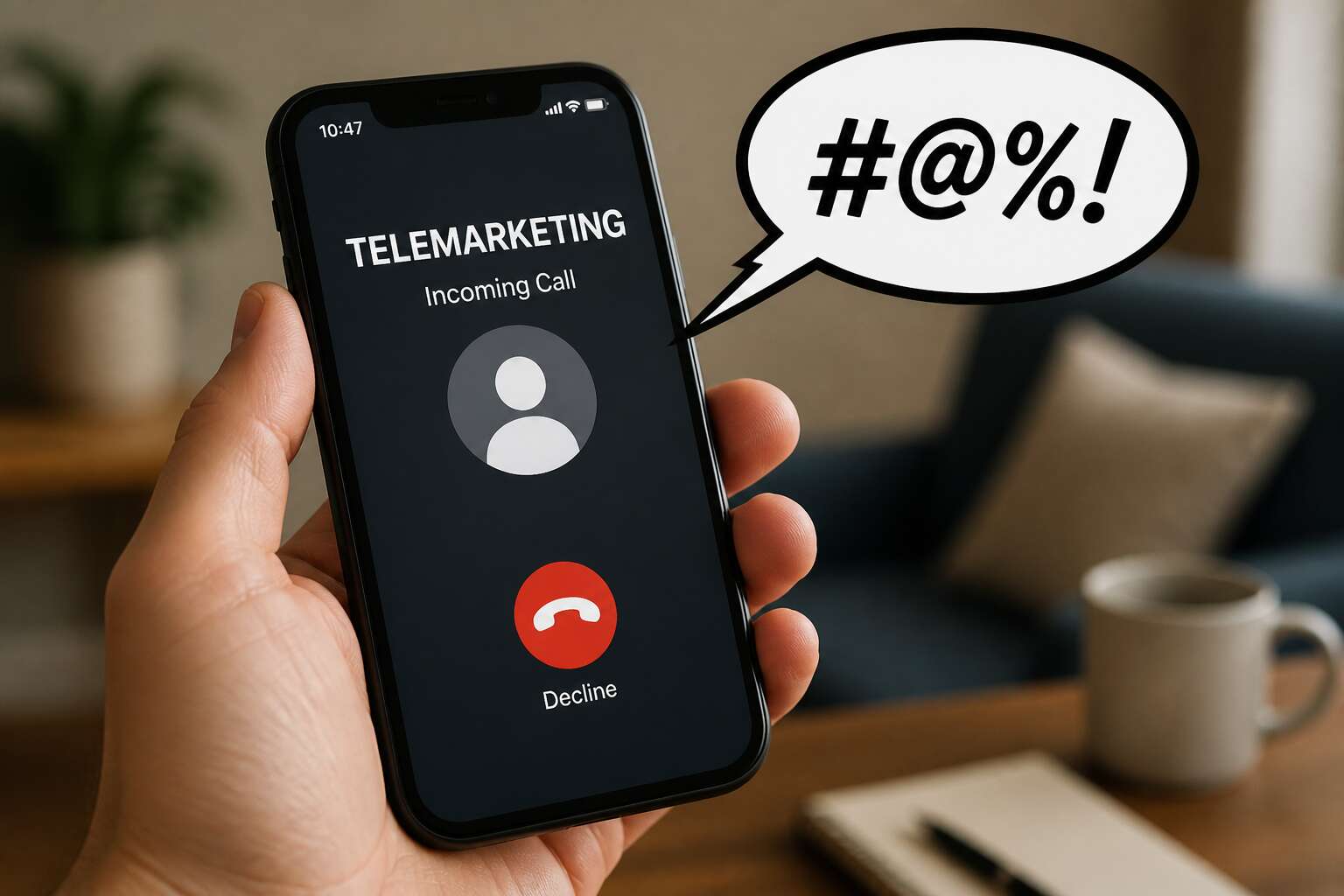
Legal Implications of Xingar Telemarketing
Is It Illegal to Offend Telemarketers?
In South Africa, the Protection of Personal Information Act (POPIA) governs consumer communication, but it says nothing about your right to be rude. So, can you legally tell a caller exactly what you think of their 7 PM intrusion? The short answer is yes, but only within reason. Aggressive verbal abuse, threats, or hate speech can cross the line into criminal territory, specifically crimen injuria, which is the unlawful and intentional impairment of another person’s dignity.
The frustration is real, and the urge to explode is understandable. Yet, the legal system views the call center agent as an individual with rights too. While a sharp “take me off your list” is protected, a tirade of profanity might lead to a charge of verbal assault or harassment. The practical consequences are rarely criminal prosecution, but rather a potential civil claim for damages.
Your tone dictates the legal exposure when you decide to pode xingar telemarketing. If you stay firm but polite, you are entirely in the clear. If you resort to insults aimed at their race, gender, or personal character, you have created a legal problem for yourself.
Legal responses you might trigger:
– A formal complaint to the Information Regulator
– A civil lawsuit for defamation or emotional distress
– A police charge of crimen injuria
– A permanent block on your number, which paradoxically reduces future calls
This is a test of self control more than a legal loophole. The system knows you are angry, and it has crafted these laws to prevent the conflict from escalating beyond the phone line. The line between venting frustration and committing an offence is thin, but it is drawn firmly by your vocabulary. Before you unleash a storm, ask yourself if the brief satisfaction is worth a potential court summons. The person on the other end is just doing a job, and the law protects them from your wrath, even when their call is entirely unwelcome.
Penalties for Verbal Abuse in Brazil
In Brazil, the impulse to curse a caller collides with the Criminal Code. The act of injúria, or verbal insult, is codified in Article 140, and it applies fully to telemarketing interactions. So, can you pode xingar telemarketing without consequence? The law answers with a firm no.
Penalties for verbal abuse are concrete. A conviction carries detention of one to six months, or a fine. When insults target race, religion, or disability, the punishment intensifies under the racial injury statute. Civil courts also permit damages for moral distress, meaning your words may cost more than pride.
– Detention of 1 to 6 months
– Fines imposed by the judge
– Enhanced penalties for prejudice
– Civil compensation to the agent
The telemarketer is a legal person with dignity. When you choose to pode xingar telemarketing, you accept this risk. The frustration is real, but the criminal record is permanent.
What the Law Says About Consumer Conduct
Consumer conduct carries legal weight in Brazil, and the question of pode xingar telemarketing belongs to that framework. A heated exchange can move from a private phone call into a formal record. Call recordings, agent statements, and dialer logs may become evidence in a criminal complaint or a civil claim. I have observed how quickly frustration becomes documented.
The law does not treat the telephone as a consequence-free zone. A complainant may initiate two proceedings at once:
- A criminal complaint for verbal insult.
- A civil action for moral distress.
Each proceeding has its own burden and timeline. That reality shapes how consumer conduct is assessed when a call turns hostile.
When Self-Defense Justifies Strong Language
Self-defense creates a narrow exception in the law. When a telemarketer refuses to stop calling, or becomes aggressive first, strong language can acquire legal protection. The doctrine of legitimate reaction recognizes that words sometimes escalate before reason intervenes.
Courts weigh specific factors when hostility erupts verbally:
- The duration of harassment before the outburst.
- Whether the agent provoked the exchange.
- The proportionality of the response.
Pode xingar telemarketing? Not without limits. The defense only holds when your reaction mirrors the aggression you faced. A single sharp remark after repeated invasive calls occupies different ground than a premeditated tirade against a polite agent.
I have watched judges replay call recordings, searching for the first sign of hostility. Once one party abandons civility, the legal lens shifts. Your words remain evidence, but context decides whether they reveal self-defense or plain offense. Pode xingar telemarketing when cornered, perhaps, but the boundary between protection and provocation sits thinner than most expect.
Ethical Considerations and Professionalism
The Human Side of Telemarketing
Many South Africans wonder, pode xingar telemarketing when frustration peaks. The ethical question sits apart from legality. Every call connects you to another human, someone enduring rejection for hours on end.
Consider the human cost of harsh words. Telemarketers consistently report elevated stress levels and emotional exhaustion from verbal aggression. Professionalism does not demand silence in the face of annoyance. It demands clear boundaries.
I have found a firm, measured voice achieves more than shouting. Politeness preserves your integrity without costing you anything. The caller is not your adversary.
You may end any exchange simply by stating your disinterest and hanging up. Treating the caller with decency does not weaken your position. It demonstrates your own character under pressure.
Why Politeness Wins More Results
Pode xingar telemarketing? You can, but I have found the question is whether it serves your interests. Aggression rarely produces the outcome you want. A calm, direct response ends the call faster and leaves you feeling better about the exchange.
Professionalism works in your favour. When you speak firmly but respectfully, you retain control of the conversation. The caller hears your boundary and moves on. Politeness keeps the exchange brief.
Consider what different approaches achieve:
- A shouted insult often triggers a defensive response, prolonging the call.
- A measured refusal ends the interaction within seconds.
- Your reputation remains intact when you choose restraint.
Every interaction reflects your character. Choosing politeness costs nothing and achieves everything!
Understanding the Caller’s Perspective
In South Africa, call centre agents face rejection dozens of times per day. Their script leaves little room for personal nuance. Before you consider whether you pode xingar telemarketing, remember that the voice on the line is often a student earning a stipend, or a parent working a shift that demands cheerfulness. Professionalism here means separating the product from the person. Ethical conduct does not require silence. It requires clarity without cruelty.
When you grasp the caller’s perspective, restraint serves you better. I have found that you can state your refusal firmly and end the call. No insult. No escalation. The interaction stays clean because you chose to see a human behind the headset. That choice defines professionalism more than any legal argument ever could!
Avoiding Unnecessary Conflict
Ethical conduct is not a passive act. When you ask whether you pode xingar telemarketing, the real question is whether the insult serves your interest. It rarely does. Raising your voice hands control to the other party. Staying measured keeps the power.
Professionalism means setting boundaries without theatre. You owe the caller nothing beyond a clear refusal. You owe yourself the absence of regret. An insult may feel satisfying for a moment, but it costs more than it returns.
Your words carry weight beyond the moment. A single insult can sour an entire shift for a stranger who had no say in the call. Avoiding unnecessary conflict is not weakness. It is the efficient path to a clean ending.
Your Reputation Matters More Than You Think
Your reputation is a currency that compounds. Every interaction, including a telemarketing call, adds to your balance. I have watched colleagues lose respect from peers after shouting at a caller. In South Africa, word travels fast.
So when you ask yourself if you pode xingar telemarketing, consider the echo. The insult does not remain on the line. It settles in the memory of someone who might one day cross your path. Ethical conduct is not about being a saint. It is about preserving the image you have built.
Professionalism demands that you end the call with a clean sentence. You do not need to raise your voice. You simply state your refusal and hang up. That is the mark of a person who understands that reputation outlasts the momentary heat of irritation.
Effective Alternatives to Xingar Telemarketing
Simple Phrases to Politely End the Call
More than 80% of South Africans admit to raising their voice at an unsolicited caller at least once. Yet the question of whether you pode xingar telemarketing often overshadows a simpler truth. You do not need to shout to reclaim your time. A calm, direct sentence works faster and leaves no emotional residue. A single phrase, spoken with mild authority, disarms the most persistent script.
Consider the power of a simple declaration. “I am not interested, please remove my number.” It is clear, factual, and requires no justification. The caller cannot argue with a closed statement. If the person persists, repeat the exact same words. Consistency signals that no amount of charm will shift your position. This method respects the agent’s humanity while protecting your peace. The call ends quickly, often with a polite farewell.
For those moments when the conversation needs a firmer hand, try these structured responses:
– “This conversation is not productive. I am hanging up now.”
– “My decision is final. Thank you for calling.”
– “Please do not contact me again. Goodbye.”
Each line serves as a clean exit. You avoid the legal ambiguity of insults and the personal cost of anger. The key is tone. Deliver these words with flat neutrality, not hostility. Your calm becomes the ultimate boundary. After all, a telemarketer is paid to persist, but you are not paid to listen. Choose silence over outrage, and you will find the call ends on your terms, not theirs.
Using Humor to Defuse Tension
A well timed laugh can end a call faster than any insult. Instead of asking yourself pode xingar telemarketing, consider what a playful response achieves. Humor disarms the scripted pitch entirely. When the agent expects resistance, a lighthearted comment disrupts their flow. They have no prepared reply for someone who is genuinely amused.
One approach is to treat the call as a game. You can say, “I appreciate the effort, but I am the world’s least interested person.” It is truthful and slightly witty. Another option is to redirect with absurdity. Ask if they sell extended warranties for imaginary pets. The caller often laughs and hangs up voluntarily.
– “You have reached my personal spam filter. Please leave a message.”
– “I am flattered, but my bank account is on a strict diet.”
– “Tell me more, I need material for my next nap.”
These responses cut tension without crossing lines. The secret is delivery. Say them with a warm tone and a hint of a smile. The agent leaves the call feeling relieved, and you keep your composure. That is a far better outcome than shouting into the void.
How to Firmly Say No Without Being Offensive
Pelo visto, a pergunta que muitos sul-africanos se fazem ao atender mais uma chamada indesejada é se podem simplesmente explodir. A resposta curta é que você pode, mas o custo para a sua paz de espírito é alto demais. Xingar o telemarketing é como tomar veneno esperando que o agente do outro lado morra. O que realmente funciona é um “não” firme que corta o script pela raiz.
Pense no tempo perdido. Um telefonema educado mas direto dura trinta segundos. Uma discussão acesa pode consumir dez minutos da sua tarde e ainda deixar você com o humor arruinado. O segredo está em usar frases que encerrem a conversa sem dar margem para réplica, algo como uma tranca verbal. Você não precisa de grosseria, precisa de precisão cirúrgica.
Aqui estão algumas linhas de defesa que uso com frequência e que nunca falham:
– “Eu entendo o seu trabalho, mas não tenho interesse. Pode me remover da lista, por favor?”
– “Este não é um bom momento e nunca será. Obrigado pela ligação.”
– “Não vou comprar nada hoje. Desejo um bom dia e boa sorte.”
A razão pela qual essas frases funcionam é que elas oferecem zero resistência. O agente é treinado para lidar com objeções, não com concordância. Quando você agradece e encerra, o call center não tem onde se agarrar. É o equivalente verbal de um golpe de jiu-jitsu: você usa o momentum do oponente contra ele mesmo.
Outra tática eficaz é perguntar diretamente como ser removido do banco de dados. Isso inverte o fardo. De repente, o agente precisa explicar um procedimento burocrático, o que é a última coisa que ele quer fazer. Essa abordagem transforma a sua frustração em uma pergunta técnica, e a chamada termina com muito mais rapidez do que qualquer xingamento poderia proporcionar. Afinal, o objetivo não é vencer uma discussão, é recuperar o seu tempo.
The Power of Silence and Hanging Up
To the question of whether you can curse out a telemarketer, the answer is straightforward: you can. But swearing wastes the only resource you cannot replenish, your attention. Silence is a far more devastating reply. A well timed pause creates a vacuum the script cannot survive. The agent expects resistance, a protest, or a negotiation. They are not trained for nothing. You hold the line quiet for five seconds and they will fill the space with their own uncertainty. That awkwardness works in your favour. It discombobulates the pitch.
I have found the simple act of hanging up is the cleanest form of refusal. It is instant and complete. No explanation is necessary. The alternative is a debate you never wanted to join. Consider what transpires the moment you decide to engage:
- Your emotional bandwidth shrinks
- The caller’s machine logic takes over
- The call stretches beyond its intended purpose
The hang up is not rude; it is decisive. When you place the receiver down without a word, the power dynamic flips. You are not reacting; you are ending. Silence, followed by the dial tone, is the final word. In the arena of pode xingar telemarketing, the quiet hero is the one who simply walks away from the microphone.
Registering Your Number to Avoid Contacts
South Africans often ask if pode xingar telemarketing is a reasonable response to relentless sales pitches. It is not. A far more elegant solution involves never hearing the pitch in the first place. Registering your number on the official opt out database transforms your phone into a quiet device. The process takes minutes. The effect lasts for years.
The registry works because it shifts the burden. You stop arguing with script readers. Instead, you file your preference once, and the system does the rest.
- Register every personal line you own.
- Check the renewal date on your registration.
- Log repeat offenders with the regulator.
When your number becomes a legal liability for callers, the question of pode xingar telemarketing becomes irrelevant. You have already won.
Practical Steps to Stop Telemarketing Calls
How to Use the National Do Not Call Registry
The telephone rings at 7:42 PM, and you already know who it is. Millions of South African numbers sit in databases across the country. The National Do Not Call Registry offers a quieter path. Registration takes minutes, and most legitimate marketers stop calling within 30 days.
Once your number appears on the registry, persistent callers face penalties. Keep your registration current, as it expires after three years. If a company still rings your line, record the date, time, and caller’s name.
Practical measures that work:
- Verify your registration status on the official website
- Note the company name before ending the call
- Submit a complaint with your details to the regulator
The question of pode xingar telemarketing often tempts frustrated consumers, but the registry makes anger unnecessary. You gain silence without raising your voice.
Blocking Numbers on Your Smartphone
That telephone number glows on the screen, and your patience thins. The registry helps, but your smartphone holds the real power. We spend so much energy debating whether pode xingar telemarketing is worth the trouble, yet a simple block function ends the conversation before it starts.
My phone now handles the rejection for me. Here is how to silence the noise:
1. Locate the offending number in your call history.
2. Tap the information icon beside the entry.
3. Select “Block this Caller” and confirm your choice.
The process takes less than a minute. Your device learns the pattern, and similar numbers, often variations from the same call center, get swept into the void. The anger fades when the ringtone never plays. You reclaim the evening meal. The quiet return shifts your focus from outbursts to the simple comfort of an unchanged evening. Your phone works as a bouncer, not a battlefield. That is the cleanest victory.
Apps That Filter Unwanted Calls
The average South African receives roughly three unsolicited calls per day. That constant interruption pushes many to wonder whether they should just snap. You might feel the urge to unleash frustration, but shouting into a receiver rarely changes the number of calls. The smarter play involves letting software do the fighting.
Several dedicated applications operate like a virtual receptionist. They screen incoming numbers against a live database of known spam operations. When a match occurs, the app silently declines the call. Your phone never makes a sound. The question of whether pode xingar telemarketing becomes irrelevant because you never engage with them. Your voice stays calm and your blood pressure stays normal. These tools learn over time, adapting to the shifting tactics that call centres use to mask their identities. They also allow for manual reporting, meaning you can flag a persistent offender with a single tap. The collective data helps everyone avoid the nuisance. You are building a community firewall against the noise.
Filing Complaints Against Persistent Companies
Persistent call centres ignore polite requests. They rely on your frustration. When you wonder whether pode xingar telemarketing will finally stop them, it will not. Complaints work better.
Start a call log. Note the date, time, and company name. Capture the agent’s ID if possible. Keep this record for every unwanted call. Before you decide pode xingar telemarketing is the only answer, consider the official route.
Lodge a formal grievance with the Information Regulator of South Africa. They enforce the Protection of Personal Information Act. Here is what to include:
- The exact phone number that called you
- Proof the company ignored your opt-out request
- Any recording or transcript of the interaction
Submit the form online. Keep your reference number. Follow up every two weeks. The regulator can issue fines. Persistent offenders face real consequences. You do not need to shout. You only need to document, report, and wait. Your complaint becomes a permanent mark against their licence.
Adjusting Your Phone Settings
Your phone settings are more effective than your vocal cords. Before you wonder whether pode xingar telemarketing will change anything, silence the unknown callers at the source. Android and iOS both offer call screening features that route unidentified numbers straight to voicemail. You never hear the ring, and they never hear your voice.
On most devices, Do Not Disturb with a whitelist exception works well. Only contacts on your list ring through. Everyone else goes to voicemail without a sound. The telemarketer’s script gets delivered to a machine, not to you.
For callers who rotate numbers, open your sound settings:
- Silence unknown callers
- Send repeated calls to voicemail
- Turn off call preview for hidden IDs
These toggles take a minute to find. Asking whether pode xingar telemarketing is worth it takes longer. Your phone settings solve the problem permanently, while your anger only entertains the caller.
Consequences of Being Rude to Telemarketers
How Your Behavior Affects Call Center Employees
When you shout at a telemarketer, that person remembers the interaction long after the call ends. Call center employees often face dozens of hostile conversations per shift. The question “pode xingar telemarketing” comes from frustration, but the answer involves real human cost.
Your tone changes everything for the person listening. They cannot hang up, cannot talk back, and cannot escape the interaction. A single abusive call can shift an employee’s entire day. I have seen otherwise cheerful agents become withdrawn after one particularly nasty exchange.
- Stress levels rise after verbal abuse
- Job satisfaction drops sharply
- Turnover rates increase at call centers
Each rude exchange also affects the next caller. The employee’s voice tightens, their patience thins. When people search for pode xingar telemarketing, they rarely consider this ripple effect on someone simply doing their job!
Potential Legal Risks of Aggressive Language
Every recorded call creates a permanent record. When you shout at a telemarketer, that audio becomes evidence. South African companies routinely monitor interactions, and aggressive outbursts can be flagged, logged, and even shared with regulators. Your words carry weight long after you press end.
People who repeatedly ask “pode xingar telemarketing” rarely consider the psychological toll on themselves. The adrenaline fades, but the memory of your own harshness lingers. You carry that moment with you.
- Your language could be used in a formal complaint against you
- Companies maintain blacklists of abusive numbers
- Aggressive callers face heightened scrutiny on future contacts
Each insult becomes a transaction where you trade your composure for a fleeting sense of dominance. The telemarketer moves on to the next call, but your sharp words echo in your own conscience. Nobody wins that exchange.
Impact on Future Customer Service Interactions
Every call center keeps a file on you. That file remembers your worst moments, including the day you shouted at a telemarketer. The question “pode xingar telemarketing” has a practical answer that goes beyond legality: your words become a permanent part of your customer record.
When you call back with a genuine problem, the agent reads that file before speaking to you. You get shorter answers, stricter policies, and less flexibility. Companies train staff to protect themselves from hostile callers, not to accommodate them! Asking “pode xingar telemarketing” is asking for future friction.
- Your number may be flagged for escalation to managers who enforce rules literally
- You lose access to retention offers that polite customers receive
- Your repeated calls trigger automated warnings on your account
That is the real consequence. The abuse does not stay on one call. It shapes how every future representative treats you.
Psychological Effects of Conflict on Both Sides
Raising your voice at a telemarketer triggers a physiological response in both parties. Your heart rate climbs, your focus narrows, and the conversation shifts from a service request into a contest. The agent, trained to stay composed, often absorbs the same stress markers internally.
The psychological residue lingers after the call ends. Your evening carries an unsettled edge. The agent carries the encounter into the next conversation, becoming more guarded and less willing to extend flexibility.
Pode xingar telemarketing without emotional cost? Not really. The encounter leaves measurable traces on both sides:
- Cortisol levels stay elevated for hours after the exchange
- Callers replay the conversation, cycling through regret or justification
- Agents adopt defensive communication habits that persist through their shift
Pode xingar telemarketing and expect no aftermath? The evidence points to the opposite. That single outburst reshapes your mood and the agent’s approach, turning one tense moment into a pattern of strained interactions that outlasts the call itself.
Consumer Rights and Regulatory Protections
Your Rights When Receiving Unwanted Calls
The telephone rings just as dinner begins, and you already know who it is. In South Africa, the Protection of Personal Information Act (POPIA) and the Consumer Protection Act establish clear frameworks for handling these unwanted calls. You have the right to demand your number be removed from telemarketing databases, and any further contact after that request may constitute an infringement. While the question of whether pode xingar telemarketing is legally defensible remains separate, regulation provides a more decisive remedy.
Your lawful protections include:
- Requesting your number be removed from call lists
- Filing a formal complaint with the Information Regulator
- Documenting each call’s timestamp and origin as evidence
Registered complaints carry real weight. These protections transform you from a passive recipient into an active claimant, someone who exercises lawful authority rather than reacting with frustration. That shift matters, because the law responds to evidence, not anger.
Companies’ Obligations Under Brazilian Law
Brazil’s Consumer Defence Code treats an unwanted sales call as a regulated transaction, not a private annoyance. Companies must identify themselves, state the purpose of contact, honour a refusal, and retain records that prove compliance. The LGPD adds another layer: consent and data minimisation govern how numbers enter a telemarketing queue. I have seen how this framework shifts attention from the provocative phrase pode xingar telemarketing to enforceable corporate conduct.
Consumers may demand clear information and lodge complaints with Procon or consumidor.gov.br. Regulators can impose sanctions for persistent contact and data misuse. Companies carry duties that include:
- Honouring opt-out requests promptly.
- Documenting consent and call records.
- Responding to official consumer complaints.
How to Formally Complain to Anatel
A formal complaint to Anatel accomplishes more than any heated exchange with a caller. Every submission receives a protocol number, and carriers face deadlines to respond. I have watched consumers exhaust themselves over pode xingar telemarketing debates while the regulator quietly logs each interaction.
To file a complaint against a persistent telemarketer, gather the company name, the call date and time, and the displayed number. Anatel’s online portal accepts submissions through its Consumer Service area. You can also register complaints by telephone at 1331 or through the Anatel Consumer App. The agency’s ouvidoria, or ombudsman office, handles escalated cases that remain unresolved after the carrier’s first response.
- Protocol numbers are assigned to every submission.
- Call logs and screenshots serve as evidence.
- Requests to stop contact are formally documented.
Persistent calls after a formal complaint result in administrative fines against the carrier. The law offers a structured path to resolution without requiring consumers to confront call center staff.
Protections Against Harassment and Abusive Calls
More than 200 million calls are placed to Brazilian consumers every month. Most are unsolicited. The legal framework treats these not as minor annoyances but as potential violations of consumer dignity. Your rights are established, not theoretical. Consumers often wonder if pode xingar telemarketing is an acceptable form of release. The law does not grant permission, but it does offer better alternatives that actually stop the calls.
The Brazilian Consumer Defense Code (CDC) guarantees respect and protection against abusive practices. Persistent contact after a formal request to stop qualifies as harassment. Carriers must comply with specific regulations, including the maintenance of a “Do Not Call” list. Key obligations include:
– Identifying themselves clearly and immediately during the call
– Respecting any request to terminate the conversation
– Not using pre-recorded messages without consent
– Honoring requested time windows for contact
These protections exist to give you control over your phone line. When companies fail to comply, the consequences shift from personal frustration to regulatory action. The power dynamic changes when you stop reacting emotionally and start documenting the behavior. The question of pode xingar telemarketing becomes irrelevant once you understand the weight of your formal rights. Registering your number with the national do not call registry is the first step in activating these protections. Every recorded contact after that registration becomes a data point in a potential administrative case, not just a bad memory.




0 Comments